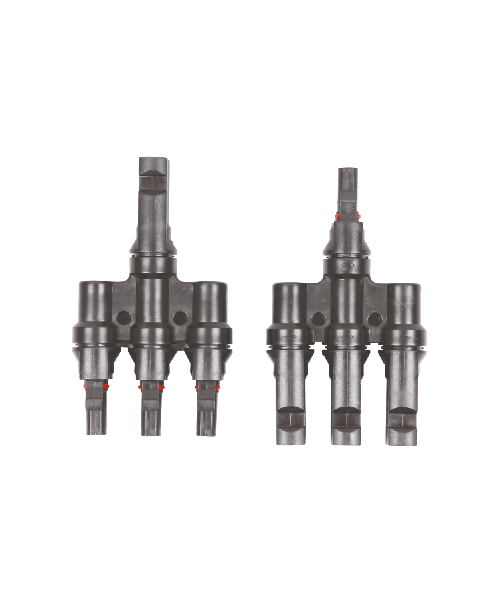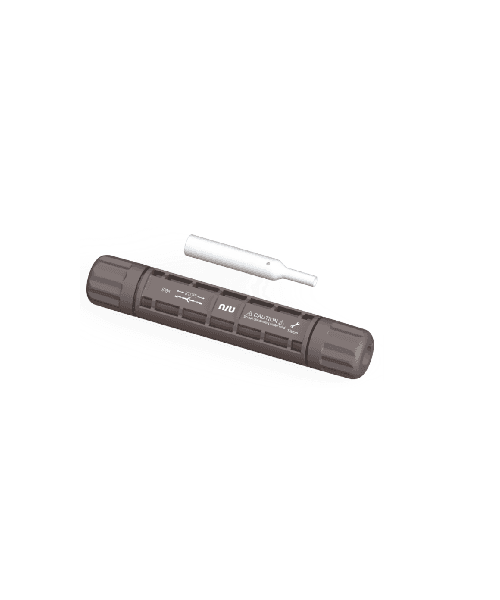
Branch Connector 1 to 2 for Parallel PV Connections
Branch connector 1 to 2 enables safe and efficient parallel connections in solar power systems and PV installations.
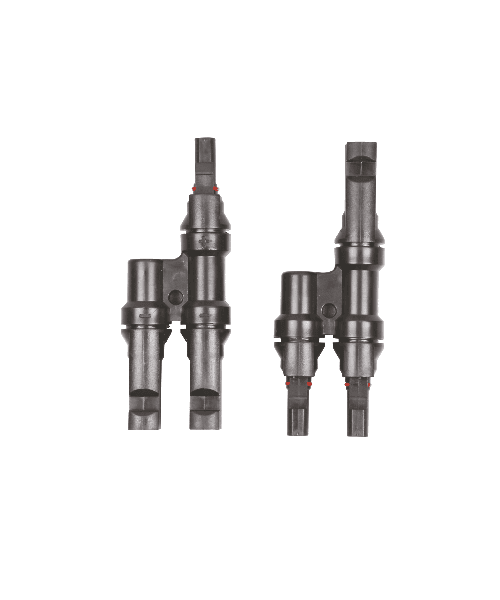
The Branch Connector 1 to 2 is designed to create reliable parallel connections in solar power systems. It allows one PV input to be split into two outputs while maintaining stable power transmission and low electrical loss. With a compact design and secure interface, this connector is ideal for expanding PV arrays and optimizing system layout in various solar applications.
SOLAR T BRANCH CONNECTOR SYSTEM
Technical Data(1 to 2)
Item | Specification | Item | Specification |
|---|---|---|---|
Connector system | MC4 CONNECTING | Insulation material | PPO |
Rated current | Certified by 50A | Locking system plug | Snap-in (nur/only MC4) |
Rated voltage | 1500V DC (IEC) / 600V DC (UL) | Flame class | UL94-HB / UL94-V0 |
Ambient temperature range | -40°C...+90°C (IEC) / -40°C...+40°C (UL) | Safety class | II |
Degree of protection, mated | IP67 | Contact system | MC Multilam |
Contact resistance of plug connectors | 0.5mΩ | Type of termination Crimpen | Crimping |
Contact material | Copper, tin plated | Cable Size | 2.5mm², 4mm², 6mm² |
Insertion Force /With Draw Force | <50N/>50N | Warranty | 5 years |
FAQs
Q1: What is a Branch Connector 1 to 2 used for?
It splits one PV input into two parallel outputs.
Q2: Where is it commonly used?
It is used in PV array expansion and parallel connections.
Q3: Does it affect power transmission efficiency?
It is designed to maintain stable power flow.
Q4: Is it suitable for different system sizes?
Yes, it can be used in various PV system scales.
Q5: Does it simplify PV system wiring?
Yes, it reduces wiring complexity.