Technical Center

A comprehensive hub for solar cable specifications, connection standards, installation guidance, and engineering support.

Advanced PV Technology That Powers Reliable Solar Systems

At EcoLinker’s Technical Center, we focus on the core engineering behind high-performance solar cables, connectors, and PV assembly solutions. Our team develops durable, safe, and efficient components designed for utility-scale solar farms, commercial rooftops, and off-grid systems. Every product is shaped by strict testing, precision manufacturing, and continuous material innovation.

Material Engineering: Premium copper conductors, UV-resistant insulation, halogen-free and flame-retardant compounds.

Electrical Performance: Low resistance, stable conductivity, and minimal power loss across long-term outdoor use.

Environmental Durability: Extreme-temperature performance, moisture blocking, salt-spray resistance, and anti-aging stability.

Precision Manufacturing: Automated extrusion, laser measurement, crimping validation, and 100% quality inspection.

Cable Engineering

Developed with advanced copper stranding and high-grade insulation to ensure stable performance in harsh outdoor conditions.

Cable Engineering

Developed with advanced copper stranding and high-grade insulation to ensure stable performance in harsh outdoor conditions.

Cable Engineering

Developed with advanced copper stranding and high-grade insulation to ensure stable performance in harsh outdoor conditions.

PV Connector Technology

Designed for secure locking, low contact resistance, and long-term reliability in all PV system environments.

PV Connector Technology

Designed for secure locking, low contact resistance, and long-term reliability in all PV system environments.

PV Connector Technology

Designed for secure locking, low contact resistance, and long-term reliability in all PV system environments.

Assembly & Integration

Precision-built cable assemblies with consistent crimping quality, perfect for EPCs, OEMs, and large-scale installations.

Assembly & Integration

Precision-built cable assemblies with consistent crimping quality, perfect for EPCs, OEMs, and large-scale installations.

Assembly & Integration

Precision-built cable assemblies with consistent crimping quality, perfect for EPCs, OEMs, and large-scale installations.

Quality & Testing

Every batch undergoes electrical, mechanical, and environmental testing to meet IEC, TÜV, and international standards.

Quality & Testing

Every batch undergoes electrical, mechanical, and environmental testing to meet IEC, TÜV, and international standards.

Quality & Testing

Every batch undergoes electrical, mechanical, and environmental testing to meet IEC, TÜV, and international standards.

OUR TECHNOLOGY

OUR TECHNOLOGY

Advanced technologies powering reliable solar interconnection systems

Advanced Electron-Beam Crosslinking Technology

We utilize advanced electron-beam (E-beam) crosslinking technology in the manufacturing of our solar cables. This cutting-edge process enhances the molecular structure of the cable insulation, significantly improving durability, safety, and long-term performance in demanding photovoltaic applications.

Advanced Electron-Beam Crosslinking Technology

We utilize advanced electron-beam (E-beam) crosslinking technology in the manufacturing of our solar cables. This cutting-edge process enhances the molecular structure of the cable insulation, significantly improving durability, safety, and long-term performance in demanding photovoltaic applications.

Advanced Electron-Beam Crosslinking Technology

We utilize advanced electron-beam (E-beam) crosslinking technology in the manufacturing of our solar cables. This cutting-edge process enhances the molecular structure of the cable insulation, significantly improving durability, safety, and long-term performance in demanding photovoltaic applications.

How Electron-Beam Crosslinking Works

Electron-beam crosslinking involves exposing cable insulation to a controlled beam of high-energy electrons. This process creates strong molecular bonds without the use of chemical additives, resulting in insulation that is highly resistant to heat, UV radiation, and chemical degradation in outdoor environments.

How Electron-Beam Crosslinking Works

Electron-beam crosslinking involves exposing cable insulation to a controlled beam of high-energy electrons. This process creates strong molecular bonds without the use of chemical additives, resulting in insulation that is highly resistant to heat, UV radiation, and chemical degradation in outdoor environments.

How Electron-Beam Crosslinking Works

Electron-beam crosslinking involves exposing cable insulation to a controlled beam of high-energy electrons. This process creates strong molecular bonds without the use of chemical additives, resulting in insulation that is highly resistant to heat, UV radiation, and chemical degradation in outdoor environments.

Enhanced Electrical and Mechanical Performance

E-beam crosslinked solar cables offer higher dielectric strength and tensile strength compared to conventional cables. These enhanced electrical and mechanical properties help reduce the risk of insulation failure, improve power transmission efficiency, and ensure stable operation of solar power systems.

Enhanced Electrical and Mechanical Performance

E-beam crosslinked solar cables offer higher dielectric strength and tensile strength compared to conventional cables. These enhanced electrical and mechanical properties help reduce the risk of insulation failure, improve power transmission efficiency, and ensure stable operation of solar power systems.

Enhanced Electrical and Mechanical Performance

E-beam crosslinked solar cables offer higher dielectric strength and tensile strength compared to conventional cables. These enhanced electrical and mechanical properties help reduce the risk of insulation failure, improve power transmission efficiency, and ensure stable operation of solar power systems.

Superior Reliability in Harsh Environments

Thanks to their resistance to extreme temperatures, UV exposure, and environmental stress, E-beam crosslinked solar cables are well suited for long-term outdoor use. This reliability makes them an ideal choice for residential, commercial, and utility-scale photovoltaic installations.

Superior Reliability in Harsh Environments

Thanks to their resistance to extreme temperatures, UV exposure, and environmental stress, E-beam crosslinked solar cables are well suited for long-term outdoor use. This reliability makes them an ideal choice for residential, commercial, and utility-scale photovoltaic installations.

Superior Reliability in Harsh Environments

Thanks to their resistance to extreme temperatures, UV exposure, and environmental stress, E-beam crosslinked solar cables are well suited for long-term outdoor use. This reliability makes them an ideal choice for residential, commercial, and utility-scale photovoltaic installations.

Sustainable and Environmentally Responsible Manufacturing

The E-beam crosslinking process is a clean and sustainable manufacturing method. It requires no chemical crosslinking agents and produces minimal environmental impact, making it a responsible solution for customers seeking high-performance solar cables with a reduced ecological footprint.

Sustainable and Environmentally Responsible Manufacturing

The E-beam crosslinking process is a clean and sustainable manufacturing method. It requires no chemical crosslinking agents and produces minimal environmental impact, making it a responsible solution for customers seeking high-performance solar cables with a reduced ecological footprint.

Sustainable and Environmentally Responsible Manufacturing

The E-beam crosslinking process is a clean and sustainable manufacturing method. It requires no chemical crosslinking agents and produces minimal environmental impact, making it a responsible solution for customers seeking high-performance solar cables with a reduced ecological footprint.

Long Service Life and Cost Efficiency

Although E-beam crosslinked solar cables may have a slightly higher initial cost, their extended service life and reduced maintenance needs deliver long-term value. Improved durability and resistance to electrical breakdown contribute to lower system failure rates and overall lifecycle cost savings.

Long Service Life and Cost Efficiency

Although E-beam crosslinked solar cables may have a slightly higher initial cost, their extended service life and reduced maintenance needs deliver long-term value. Improved durability and resistance to electrical breakdown contribute to lower system failure rates and overall lifecycle cost savings.

Long Service Life and Cost Efficiency

Although E-beam crosslinked solar cables may have a slightly higher initial cost, their extended service life and reduced maintenance needs deliver long-term value. Improved durability and resistance to electrical breakdown contribute to lower system failure rates and overall lifecycle cost savings.

PV Connector Assembly Instructions
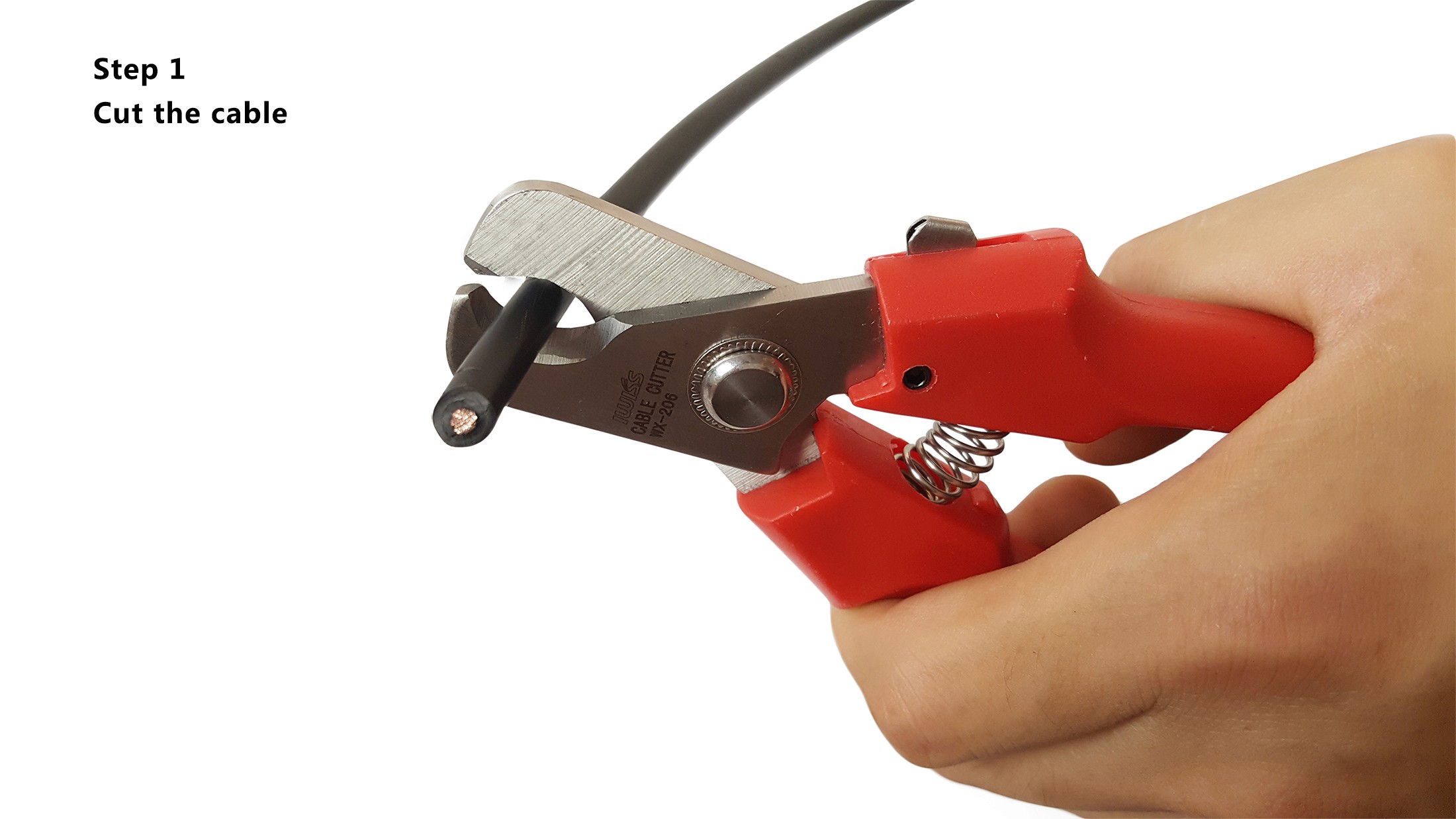
Step 1 Cut the cable

Use the solar cable cutter to cut the cable with exact length you need.

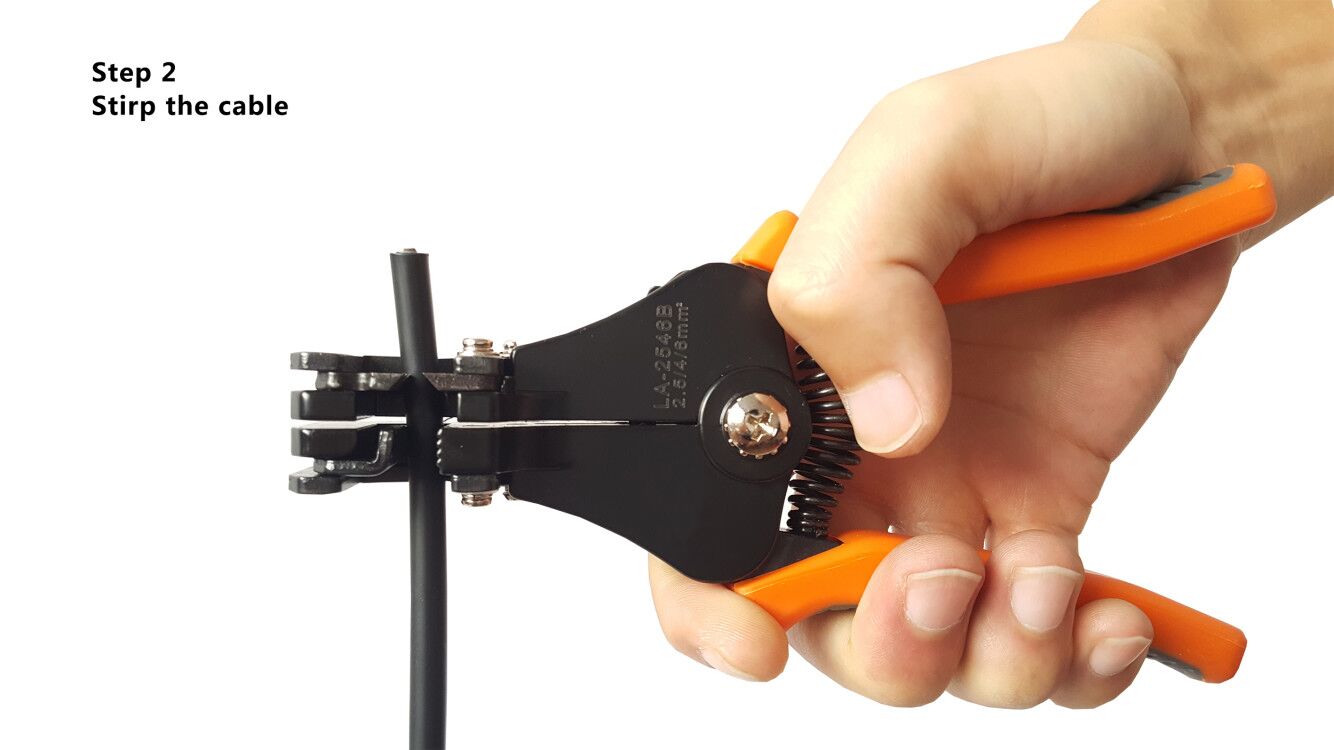
Step 2 Stirp the cable

Choose the right cable gauge, do not cut individual strands at stripping.

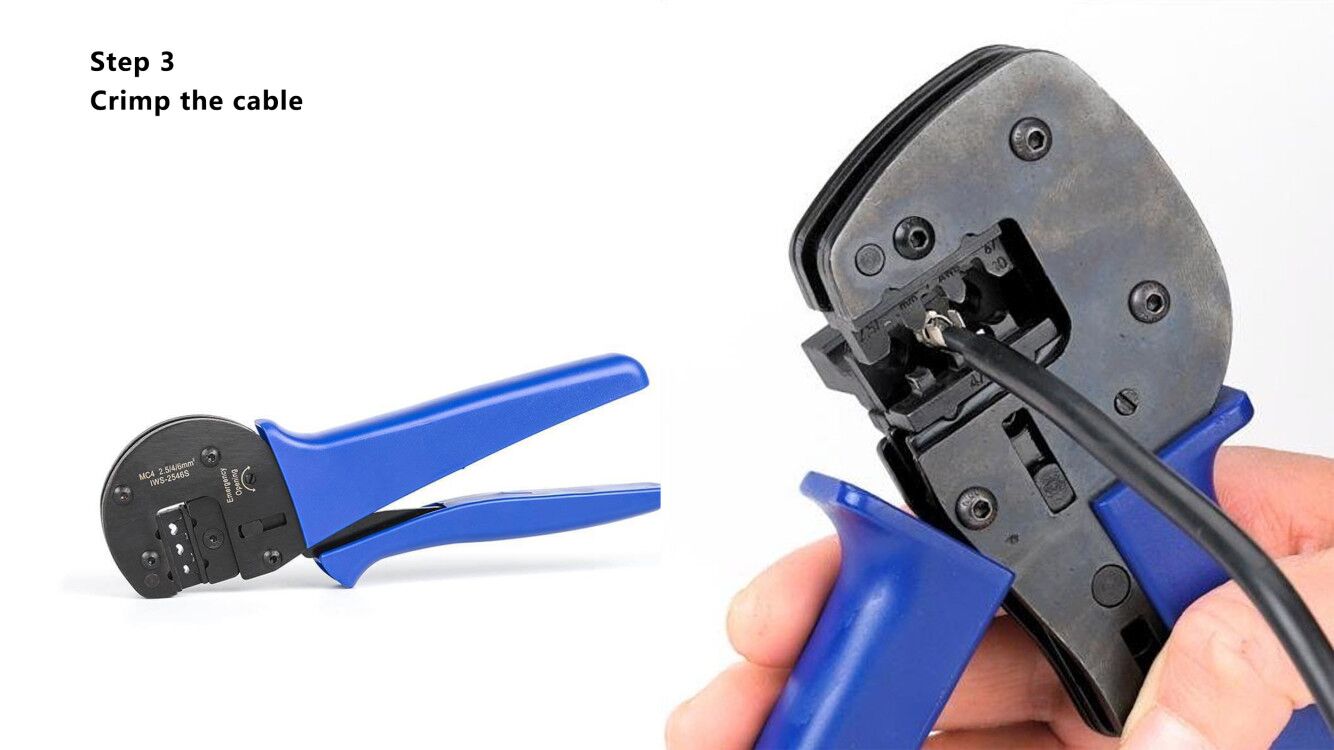
Step 3 Crimp the cable

Open the clamp and hold. Place the contact in the appropriate cross-section range. Press the pliers gently together until the crip lugs are properly located within the crimping die.

Step 1 Cut the cable

Use the solar cable cutter to cut the cable with exact length you need.

Step 2 Stirp the cable

Choose the right cable gauge, do not cut individual strands at stripping.

Step 3 Crimp the cable

Open the clamp and hold. Place the contact in the appropriate cross-section range. Press the pliers gently together until the crip lugs are properly located within the crimping die.

Step 1 Cut the cable

Use the solar cable cutter to cut the cable with exact length you need.

Step 2 Stirp the cable

Choose the right cable gauge, do not cut individual strands at stripping.

Step 3 Crimp the cable

Open the clamp and hold. Place the contact in the appropriate cross-section range. Press the pliers gently together until the crip lugs are properly located within the crimping die.

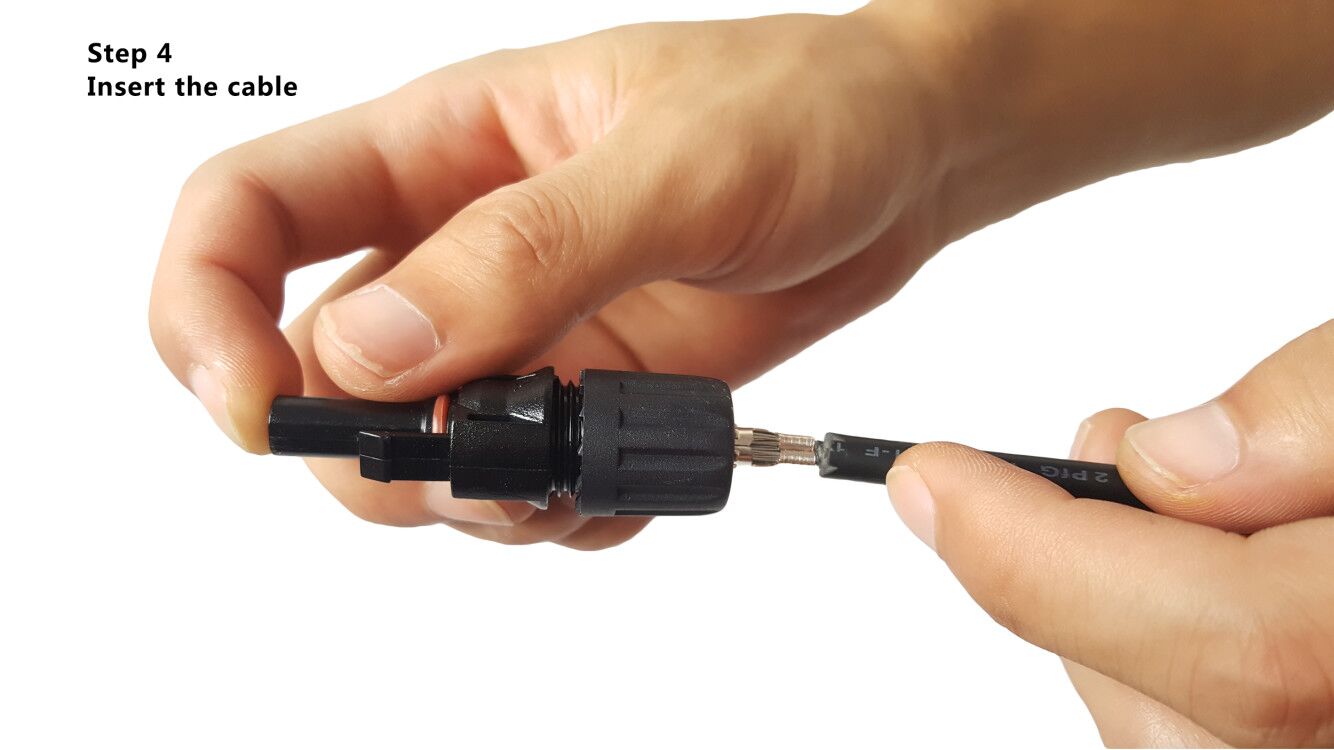
Step 4 Insert the cable

Insert the crimped-on contact into the insulator of the male or female coupler until it clicks into place. Pull gently on the lead to check that the metal part is correctly engaged.

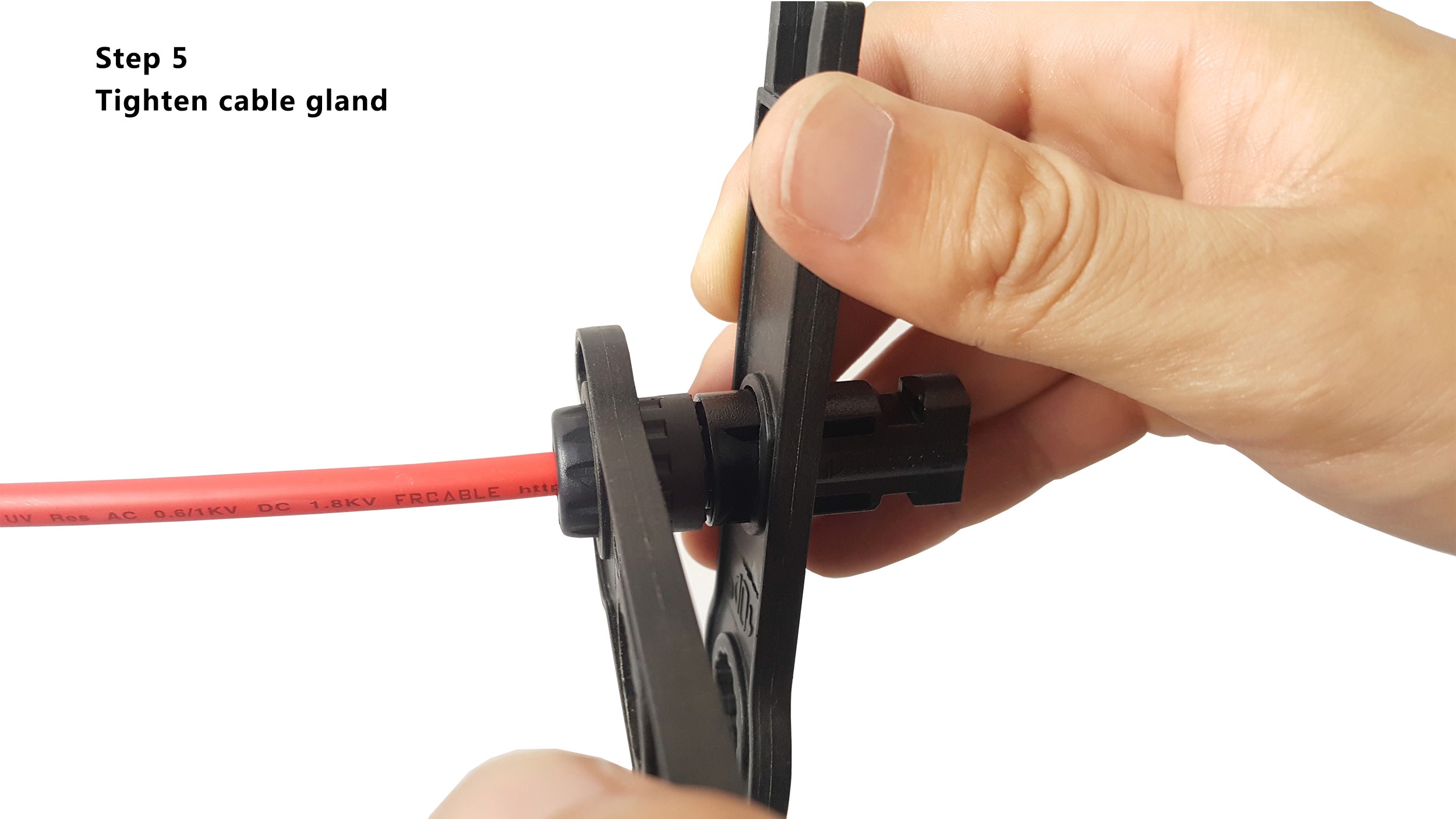
Step 5 Tighten cable gland

Tighten the cable gland with spanner.

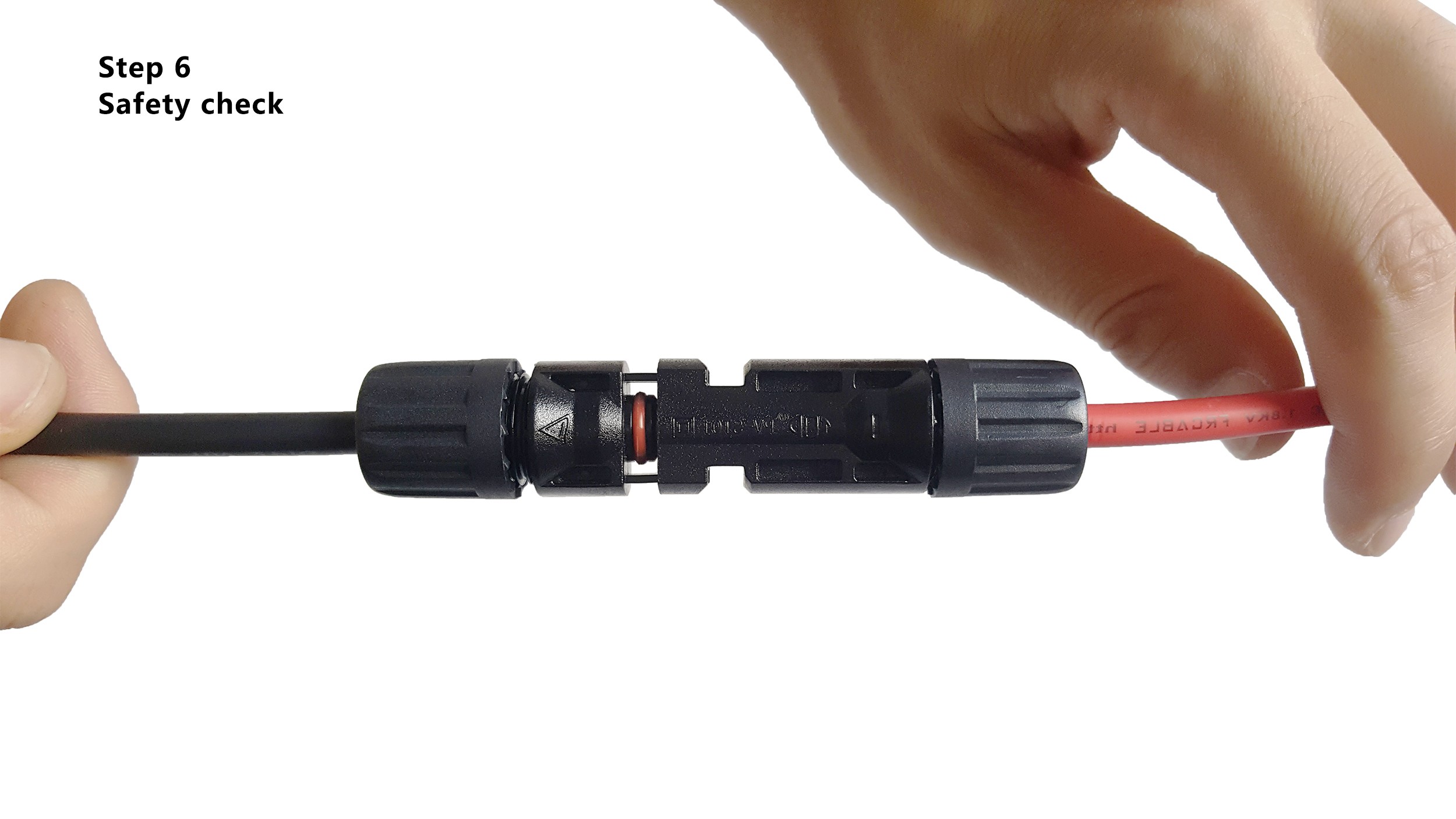
Step 6 Safety check

Plug the parts of cable coupler together until they click in palce. Check that they have engaged properly by pulling on the cable coupler.

Step 4 Insert the cable

Insert the crimped-on contact into the insulator of the male or female coupler until it clicks into place. Pull gently on the lead to check that the metal part is correctly engaged.

Step 5 Tighten cable gland

Tighten the cable gland with spanner.

Step 6 Safety check

Plug the parts of cable coupler together until they click in palce. Check that they have engaged properly by pulling on the cable coupler.

Step 4 Insert the cable

Insert the crimped-on contact into the insulator of the male or female coupler until it clicks into place. Pull gently on the lead to check that the metal part is correctly engaged.

Step 5 Tighten cable gland

Tighten the cable gland with spanner.

Step 6 Safety check

Plug the parts of cable coupler together until they click in palce. Check that they have engaged properly by pulling on the cable coupler.

Why Solar Energy Matters for Modern Power Systems

Discover the core advantages driving global adoption of solar energy and why it has become the preferred direction for modern power systems, commercial projects, and long-term energy planning.
60%+

Electricity cost savings

60%+

Electricity cost savings

60%+

Electricity cost savings

20%+

Increase in property value

20%+

Increase in property value

20%+

Increase in property value

12

Year CO₂ emissions reduced

12

Year CO₂ emissions reduced

12

Year CO₂ emissions reduced

25+

Solar system lifespan

25+

Solar system lifespan

25+

Solar system lifespan

Save electricity bills

Installing solar panels significantly reduces monthly electricity bills and dependence on the power grid. This energy independence protects against rising electricity costs and volatile fuel prices. With analysts forecasting continued increases in electricity rates, solar remains a cost-effective solution and long-term investment in the future.

Save electricity bills

Installing solar panels significantly reduces monthly electricity bills and dependence on the power grid. This energy independence protects against rising electricity costs and volatile fuel prices. With analysts forecasting continued increases in electricity rates, solar remains a cost-effective solution and long-term investment in the future.

Save electricity bills

Installing solar panels significantly reduces monthly electricity bills and dependence on the power grid. This energy independence protects against rising electricity costs and volatile fuel prices. With analysts forecasting continued increases in electricity rates, solar remains a cost-effective solution and long-term investment in the future.

Increase property value

Studies have shown properties with solar systems sell up to 20 percent faster and at a 17 percent premium compared to homes without such systems. A solar installation makes your property more attractive to buyers, increasing its resale value.

Increase property value

Studies have shown properties with solar systems sell up to 20 percent faster and at a 17 percent premium compared to homes without such systems. A solar installation makes your property more attractive to buyers, increasing its resale value.

Increase property value

Studies have shown properties with solar systems sell up to 20 percent faster and at a 17 percent premium compared to homes without such systems. A solar installation makes your property more attractive to buyers, increasing its resale value.

Reduce your carbon footprint

Unlike energy generated by fossil fuels, solar doesn’t release harmful carbon dioxide (CO2) emission. Sustainable carbon-free energy solutions such as solar are crucial to slowing the pace of climate change and preventing further damage to the environment.

Reduce your carbon footprint

Unlike energy generated by fossil fuels, solar doesn’t release harmful carbon dioxide (CO2) emission. Sustainable carbon-free energy solutions such as solar are crucial to slowing the pace of climate change and preventing further damage to the environment.

Reduce your carbon footprint

Unlike energy generated by fossil fuels, solar doesn’t release harmful carbon dioxide (CO2) emission. Sustainable carbon-free energy solutions such as solar are crucial to slowing the pace of climate change and preventing further damage to the environment.

solar cable
solar cable
solar cable

Why Solar Cables Matter in Modern PV Systems

High-performance solar cables are essential for ensuring stable energy transmission and long-term system reliability in any photovoltaic installation.

Most of the solar systems is outdoor use, characterized by high temperatures and high UV radiation. Single-core cables with a maximum permissible DC voltage of 1.8 kV Umax. The phase to ground DC voltage rating must be Uo1.5kVDC and a temperature range from -40 °C to +90 °C ambient, 120 °C on the conductor for 25 year service life against thermal ageing. DC string cables must be class II double insulated to protect against short circuits and ground faults.

Solar cable is the interconnection cable used in photovoltaic power generation. Solar cables interconnect solar panels and other electrical components of a photovoltaic system. Solar cables are designed to be UV resistant and weather resistant. They can be used within a large temperature range and are generally laid outside.

FAQs

FAQs

Clearing Doubts About Our Solar Component Solutions

What products does EcoLinker supply?

Are you a manufacturer or trading company?

Do you support OEM or custom cable assembly services?

What certifications do your solar cables and connectors meet?

Do you ship globally?

What products does EcoLinker supply?

Are you a manufacturer or trading company?

Do you support OEM or custom cable assembly services?

What certifications do your solar cables and connectors meet?

Do you ship globally?

What products does EcoLinker supply?

Are you a manufacturer or trading company?

Do you support OEM or custom cable assembly services?

What certifications do your solar cables and connectors meet?

Do you ship globally?