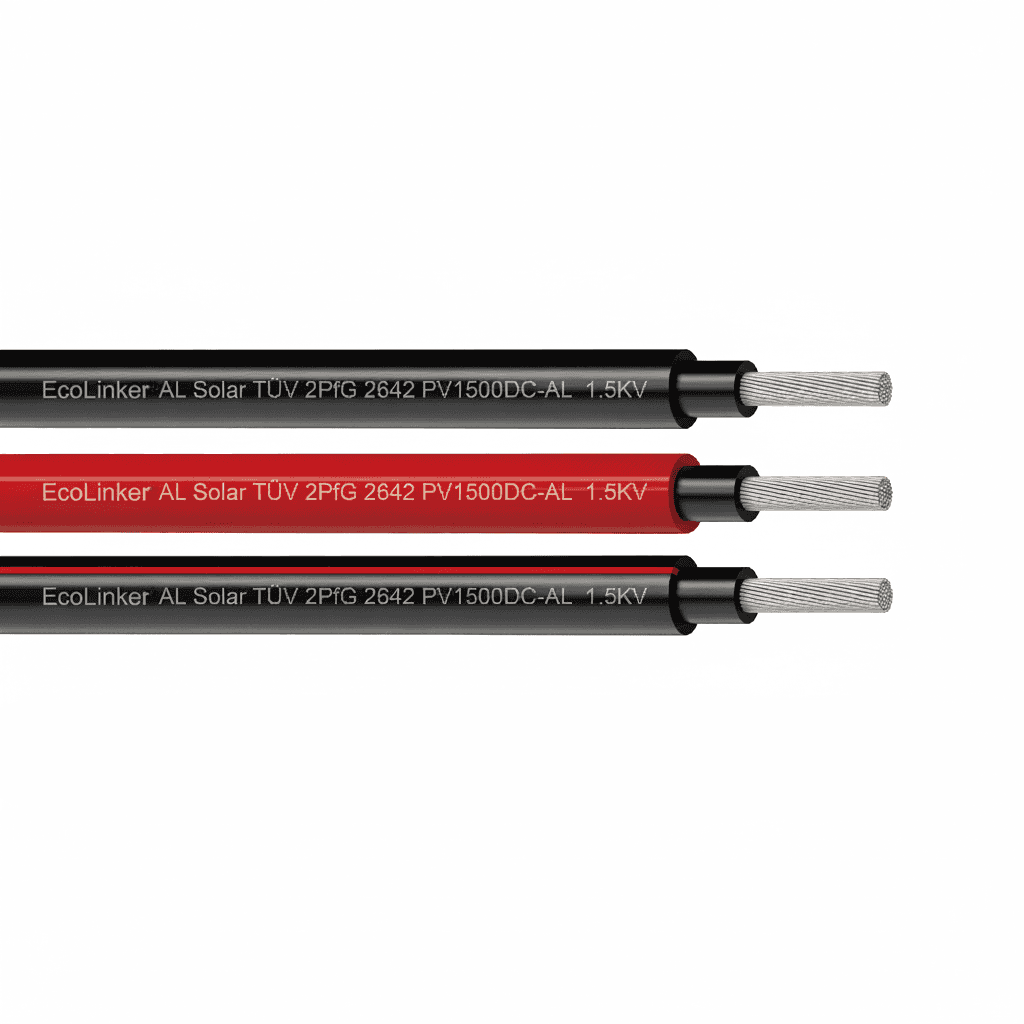
Solar Cable 62930 IEC 131 Twin Core for PV Systems
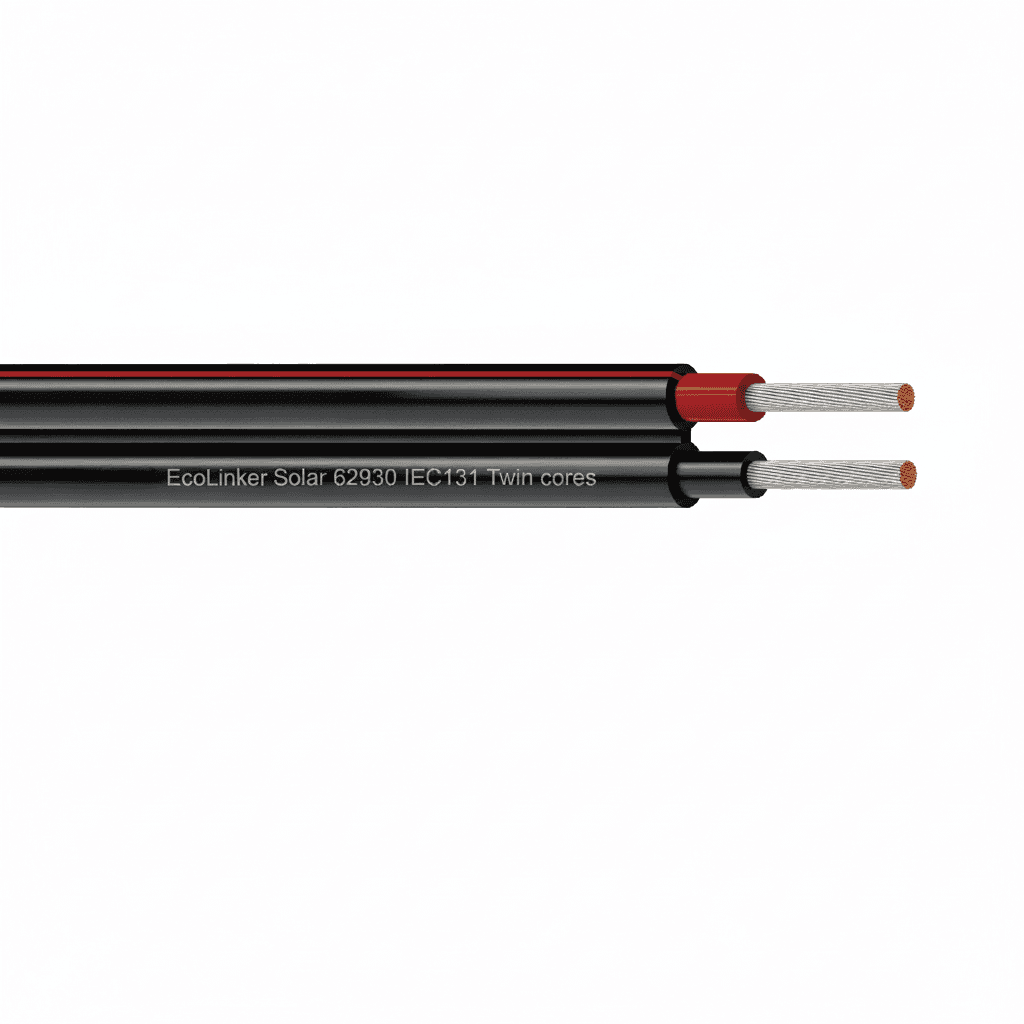
62930 IEC 131 twin-core solar cable engineered for photovoltaic installations, offering reliable DC transmission and long-term outdoor performance.
Product Specifications
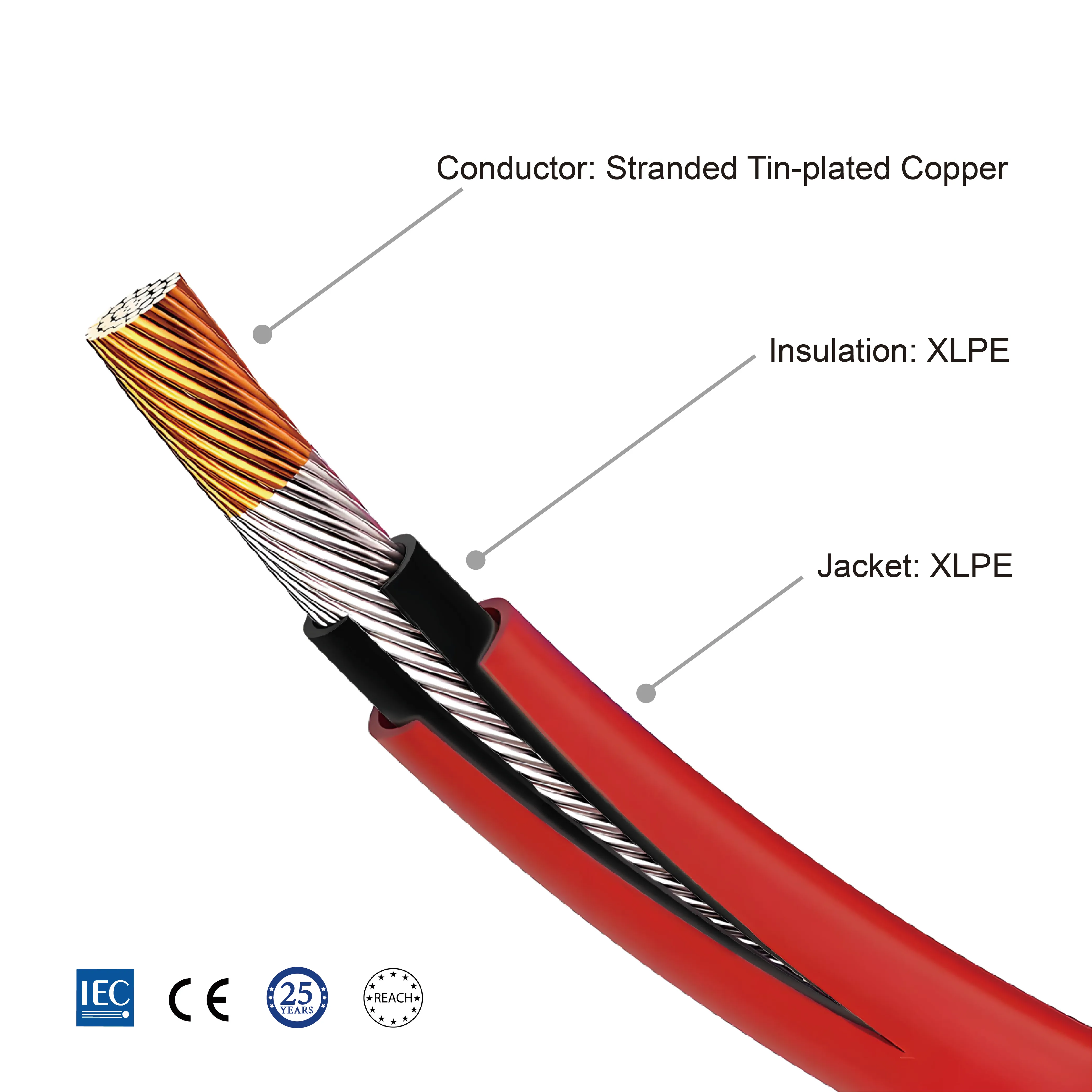
Conductor : Stranded tin-plated copper
Insulation : Cross-linked compound, Black
Jacket : Cross-linked compound, Black or Red
Rated temperature : -40℃ to 90℃
Rated voltage : 1500V DC
Advantages
Twin-cores design, more efficient wiring.
Electron Beam Cross Linked compound, XLPE/XLPE.
Resistance against UV, Ozone, Fluids, Oil, Salt & General Weathering.
Halogen Free, Flame Retardant, Low Smoke Emission.
25 years of lifetime expectancy.
RoHS-compliant according to EU norms.
Higher water resistance.
TECHNICAL DATA
Operation temperature : -40℃ to 120℃
Ambient temperature : -40℃ to 90℃
Nominal voltage : AC U0/U 1000/1000 V、DC U0/U 1500/1500 V
Max permitted operation voltage : DC 1800V
Test voltage : 6500 V
Item Data
Item description(Part No.) | Cross Section(mm²) | Color | AWG(approx) | Insulation Thickness(mm) | Jacket Thickness(mm) | Outer Dia(mm) | Conductor Resistance (Max. mΏ/m) |
|---|---|---|---|---|---|---|---|
12703340705 | 2 x 4.0 mm² | Black | 12 | 0.70 | 0.80 | 5.60 / 11.40 ±0.2 | 5.09 |
12703340806 | 2 x 4.0 mm² | Red | 12 | 0.70 | 0.80 | 5.60 / 11.40 ±0.2 | 5.09 |
12703360707 | 2 x 6.0 mm² | Black | 10 | 0.70 | 0.80 | 6.20 / 12.60 ±0.2 | 3.39 |
12703360808 | 2 x 6.0 mm² | Red | 10 | 0.70 | 0.80 | 6.20 / 12.60 ±0.2 | 3.39 |
12703310709 | 2 x 10 mm² | Black | 8 | 0.70 | 0.80 | 7.20 / 14.80 ±0.2 | 1.95 |
12703310810 | 2 x 10 mm² | Red | 8 | 0.70 | 0.80 | 7.20 / 14.80 ±0.2 | 1.95 |


The challenge
Once a vital lifeline for surrounding communities and wildlife, the waterway had become severely polluted after years of neglect. Industrial discharge, untreated sewage, and agricultural runoff led to:
Toxic water quality
Loss of aquatic biodiversity
Public health concerns
Community disconnection
Lack of real-time monitoring
FAQs
1. What is the Solar IEC 62930 IEC 131 Twin Core cable used for?
This twin-core solar cable is designed for DC connections in photovoltaic systems. It is commonly used to connect solar panels to inverters, junction boxes, or combiner boxes in residential, commercial, and industrial solar power installations.
2. What does “Twin Core” mean in solar cables?
“Twin core” refers to two insulated conductors contained within a single outer sheath. This design simplifies installation, reduces wiring complexity, and is ideal for systems requiring both positive and negative DC connections in one cable.
3. What are the advantages of IEC 62930 and IEC 131 standards?
IEC 62930 and IEC 131 standards ensure the cable meets strict requirements for UV resistance, thermal endurance, flame retardancy, and halogen-free performance. These standards help guarantee safety, durability, and long-term reliability in solar power applications.
4. What voltage and temperature ratings does this twin-core solar cable support?
This twin-core solar cable is rated for up to 1500V DC and is designed to operate reliably in temperatures ranging from -40°C to +120°C, maintaining stable electrical and mechanical performance under extreme conditions.
5. Is the twin-core solar cable UV-resistant and flame-retardant?
Yes. The outer sheath is engineered to be UV-resistant, ozone-resistant, and flame-retardant, making it suitable for long-term outdoor exposure in harsh environmental conditions.
6. Can this twin-core solar cable be installed underground or in conduit?
Yes. Its robust insulation and jacket materials make it suitable for installation in conduit, underground, rooftop, and other demanding solar installation environments.
7. What conductor materials are available for twin-core solar cables?
Twin-core solar cables are commonly available with tinned copper or aluminum conductors, allowing flexibility based on current capacity, cost considerations, and specific project requirements.
8. Why choose a professional twin-core solar cable supplier?
Working with an experienced solar cable supplier ensures consistent quality, compliance with international standards, reliable supply capacity, and support for custom specifications in large-scale or specialized solar projects.